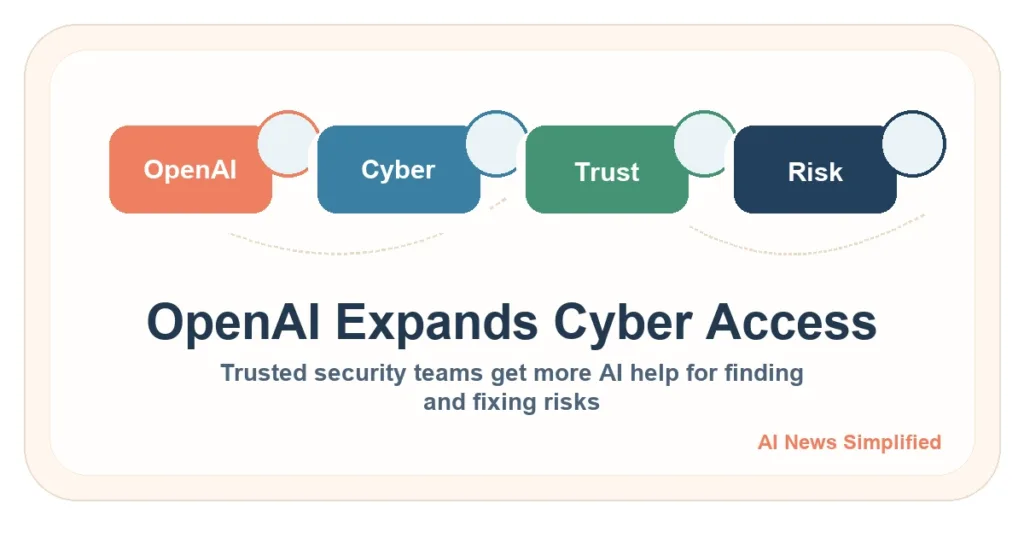
OpenAI has opened its Trusted Access for Cyber program to vetted enterprise customers and cybersecurity practitioners who want to use its strongest models for defensive security work. The company says applicants have to provide more identity and use-case information before access is approved.
In other words, OpenAI is not throwing the keys onto the table and hoping for the best. It is trying to give higher-risk cyber tools to defenders while adding more checks at the door. Defensive security work means finding and fixing problems, not helping attackers cause them.
Why this matters
Cybersecurity teams are under pressure to move faster. Better AI tools could help them test systems, spot weaknesses, and understand threats more quickly. OpenAI’s form says approved use cases include penetration testing, vulnerability work, malware reverse engineering, and threat investigations.
This matters because good cyber tools can help the digital firefighters. The catch is obvious: the same kind of capability can also be abused. That is why OpenAI is using a trust-and-screening model instead of open public access.
What to watch next
The next question is whether the screening process is strong enough to slow down bad actors without blocking legitimate defenders who actually need the help. In security, the lock matters almost as much as the tool inside the box.
Bottom line: This is a cautious step toward stronger AI for defenders, not a public free-for-all. The real test is whether OpenAI can help security teams faster without making misuse easier.
Source: OpenAI trusted access for cyber defense
What this means for me?
Stronger cyber access can help security teams find problems faster, which may protect the services normal people use. It also matters because powerful AI security tools need strict access rules so they are not misused.