AI news on Friday, May 9, 2026, was not about one giant new model. It was about something more practical: how AI gets paid for, how it stays under control, and how it points people back to real websites. If you want more plain-English coverage like this, our Latest AI News page tracks the biggest changes.
-
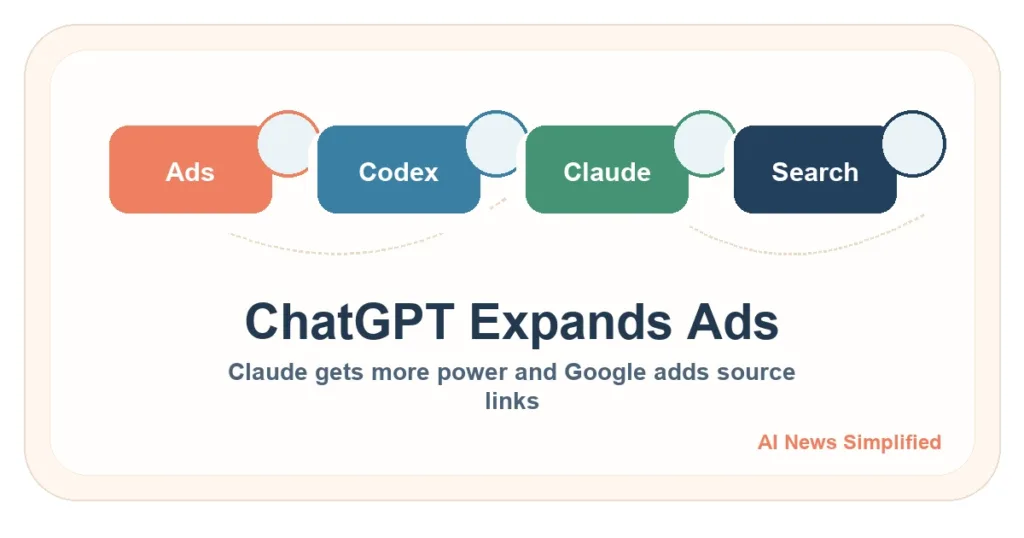
OpenAI is expanding its ChatGPT ads test. OpenAI said on May 7 that its ads pilot will soon grow beyond the United States into the United Kingdom, Mexico, Brazil, Japan, and South Korea. The company says ads will be clearly labeled, paid users will not see them, and advertisers will not get access to private chats. This matters because AI helpers are starting to look more like search engines and social apps, where free access is often paid for by ads.
-
OpenAI also showed how it keeps Codex on a leash. In a new May 8 post, OpenAI explained that Codex, its coding agent, runs inside a sandbox, uses approval checks for riskier actions, and creates logs that security teams can review later. A coding agent is an AI tool that can do tasks for you instead of only answering questions. That matters because more AI tools are moving from “tell me” to “do this,” and that only works if people can see what the tool did and stop it when needed.
-
Anthropic says Claude will get more room to work. Anthropic announced a SpaceX compute deal on May 6 that it says will bring in more than 300 megawatts of new capacity and over 220,000 NVIDIA GPUs, while also doubling Claude Code’s five-hour rate limits for several paid plans and raising some API limits. In simple terms, compute means the expensive chips and power needed to run AI. This matters because many AI limits are still caused by raw capacity, not just software design.
-
Google says its AI search answers will show more source links. Google said on May 6 that AI Mode and AI Overviews in Search will add more direct links, previews, and pointers to public discussions and original sources. That may sound small, but it gets at a big complaint: people worry AI summaries keep users inside the answer box instead of sending them to the real web. If Google follows through, readers may have an easier time checking where an answer came from.
Bottom line: The big AI story right now is not just smarter bots. It is the less flashy work underneath: ads, guardrails, computing power, and better links back to the web. That may sound boring, but it is the part that decides whether AI feels useful, trustworthy, and affordable in daily life.
Sources:
OpenAI: Testing ads in ChatGPT
OpenAI: Running Codex safely at OpenAI
Anthropic: Higher usage limits for Claude and a compute deal with SpaceX
Google: 5 new ways to explore the web with generative AI in Search