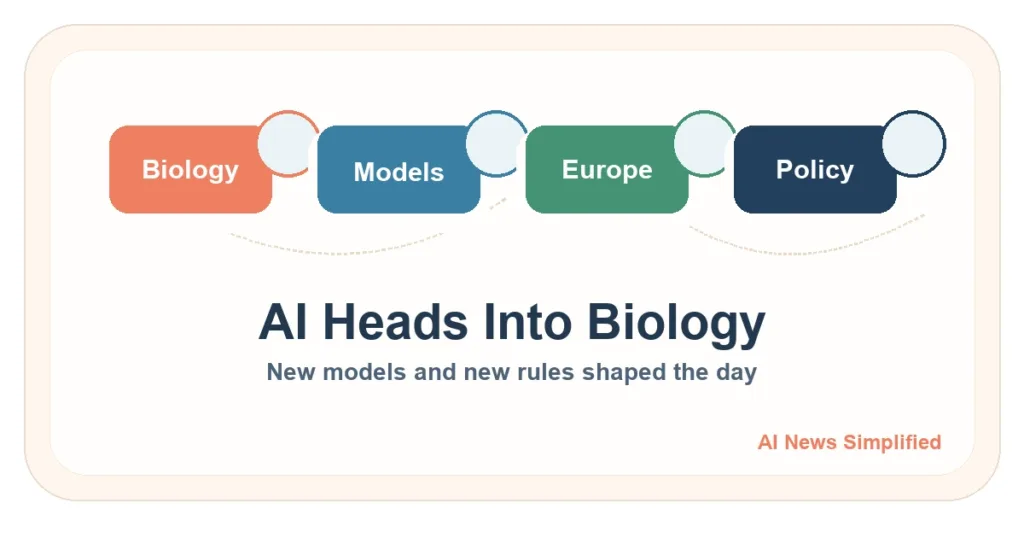
June 10 was a mix of science, policy, and tools for builders. The biggest updates asked how far AI can go in research work, how new model designs may help developers, and what companies need to know about Europe’s AI rules.
What happened
-
Anthropic looked at agents in biology. Anthropic published research on paving the way for agents in biology. That matters because biology is one of the fields where AI could speed up useful discovery, but it is also a place where mistakes can be costly and hard to spot.
-
Google introduced DiffusionGemma. Google launched DiffusionGemma as a new developer-facing model effort. This matters because model architecture changes can shape how fast, cheap, and flexible future AI tools become for developers.
-
OpenAI published a primer on the EU AI Act. OpenAI released a plain-language guide to the European Union AI Act through its global affairs work. That matters because AI rules in Europe can affect companies far beyond Europe, especially if they sell software or services across borders.
What this means for me?
- If you care about health or science, AI research in biology could eventually matter more than chatbot upgrades do.
- If you build AI products, new model designs can quietly change cost and speed more than headlines about valuations do.
- If you sell software internationally, AI regulation is becoming a business problem, not just a legal footnote.
Related reading: Latest AI News and AI Safety & Privacy.
Bottom line: AI is moving further into serious science while the rulebook around it gets thicker. Builders now have to think about both at once.