June 6 was a very OpenAI-heavy day, but the news was easy to understand. The company pushed on three fronts at once: cheaper models, better images, and more useful support for clinical work.
What happened
-
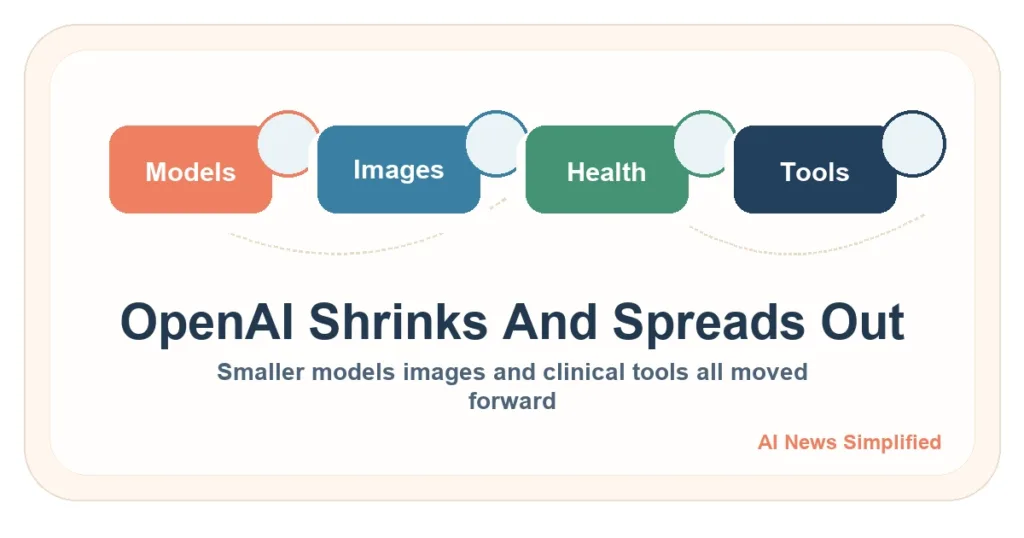
OpenAI introduced GPT-5.4 mini and nano. OpenAI launched smaller GPT-5.4 mini and nano models. That matters because smaller models are often what make AI practical for more developers and businesses. They usually cost less and fit more jobs.
-
OpenAI rolled out ChatGPT Images 2.0. OpenAI announced a new ChatGPT Images 2.0 release. This matters because image tools are moving from party tricks toward work tasks like explaining ideas, mocking up designs, and producing visual drafts faster.
-
OpenAI said ChatGPT is getting better for clinicians. OpenAI published work on making ChatGPT more useful for clinicians. That matters because health-related AI is one of the clearest places where accuracy matters more than speed, so even small improvements have real stakes.
What this means for me?
- If you build with AI, smaller models are often where the real adoption story begins.
- If you use image AI for work, expect more pressure to judge it by usefulness rather than novelty.
- If AI touches health questions, the bar should stay high even when the tools keep getting easier to use.
Related reading: Latest AI News and AI Models & LLMs.
Bottom line: June 6 was about range. OpenAI tried to make AI cheaper, more visual, and more credible in higher-stakes settings all at once.