AI news moved fast today, but a few updates stood out because they could change real life, not just headline chatter. Here is the plain-English version of what happened and why it matters.
-
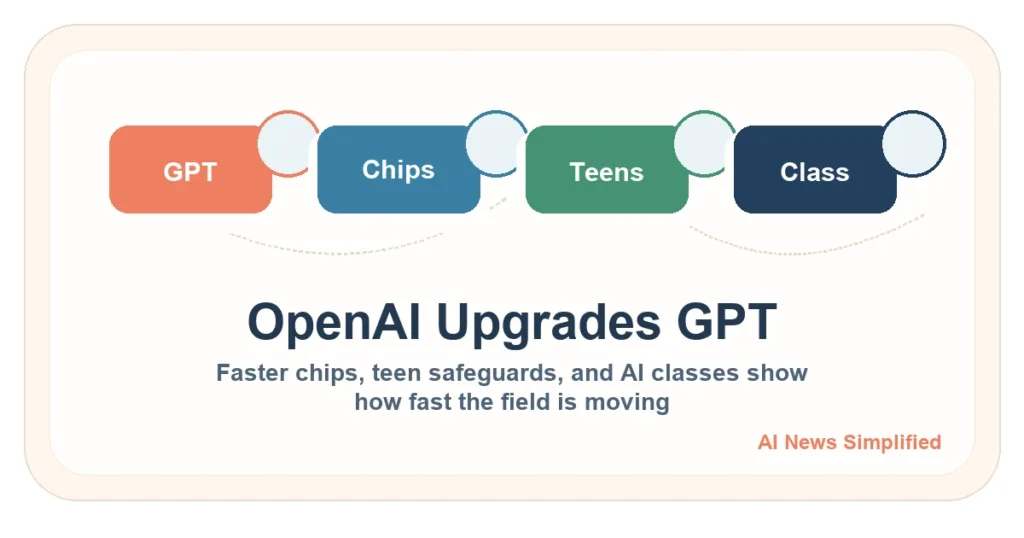
OpenAI released GPT-5.5, its newest AI model. An AI model is the software brain behind tools like ChatGPT, and OpenAI says this one is better at long, messy jobs like coding, research, spreadsheets, and using computer tools without needing as much step-by-step help. That matters because AI is slowly moving from “answer my question” to “help me finish the work,” which could save time for people who write, build, study, or run a small business.
-
Google showed off two new AI chips called TPU 8t and TPU 8i at Cloud Next. A TPU is a special chip built to train AI and run it quickly, and Google split the job in two: one chip for teaching models and one for serving answers fast. That may sound like plumbing, but better plumbing usually means cheaper and faster AI tools later, much like better roads make everyday travel easier.
-
Meta added a new safety feature for parents with supervised teen accounts. Parents can now see the broad topics their teen asked Meta AI about over the last seven days, like school or health, and Meta also formed an expert council to review teen AI well-being. This matters because families want a little window into how kids use AI without needing to read every single chat.
-
Microsoft said it will help train 3 million Australians in AI by 2028 as part of a larger A$25 billion investment in infrastructure, cyber defense, and skills. This is less flashy than a new chatbot, but it may matter just as much because people need to learn when AI is useful, when it is wrong, and when not to trust it. In simple terms, better tools are nice, but better-trained people are what keep the wheels from falling off.
Bottom line: Today was not just about smarter machines. It was also about the support system around them: better models, stronger hardware, more family safeguards, and more training for regular people. That is a healthier sign than empty AI hype.
What this means for me?
This matters if you use AI for homework, work, photos, or planning. Better models and chips can make tools faster and cheaper, while teen safeguards and training programs decide whether people can use them wisely.
Sources: