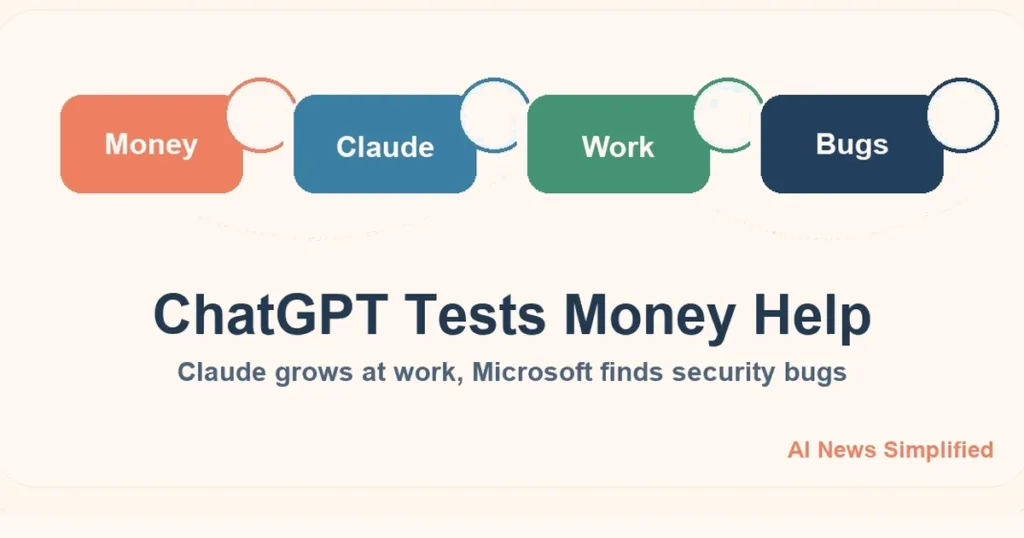
Today’s AI news has a clear theme: AI companies want to help with more than chats. They want to touch money, office work, and cybersecurity. That can be useful. It also means people need to ask sharper questions before handing over sensitive data.
1. ChatGPT is testing personal finance help
OpenAI has started testing a personal finance experience for some ChatGPT Pro users in the United States, according to TechCrunch. The feature can connect through Plaid and show things like spending, subscriptions, upcoming payments, and investment performance.
This could make budgeting easier for people who hate spreadsheets. The serious part is trust. Bank accounts reveal a lot about a person’s life, so this kind of tool needs clear privacy rules, careful permissions, and an easy off switch.
2. Claude is moving deeper into consulting work
Anthropic and PwC expanded their partnership last week. PwC said it will roll out Claude Code and Claude Cowork starting with U.S. teams, train and certify 30,000 professionals, and build new Claude-based finance and business tools.
That matters because consulting firms often help large companies decide what software to buy and how work should change. If Claude becomes part of that advice process, AI could move from “interesting tool” to “default helper” in more offices.
3. Microsoft says AI found real Windows security bugs
Microsoft said its multi-model AI security system helped find 16 vulnerabilities in Windows networking and authentication code. Four were rated critical remote code execution bugs, which is the kind of issue security teams take very seriously.
This is one of the clearer examples of AI doing useful behind-the-scenes work. It does not mean software security is solved. It does mean AI can help defenders find problems faster, especially in old and complicated code.
What this means for me?
If an AI tool asks for sensitive access, slow down. A finance helper, work assistant, or security scanner can save time, but only if you understand what it can see and who controls the data. The useful question is not “Is this AI smart?” It is “What am I letting it touch?”
Bottom line: AI is moving into more serious parts of life. That makes the tools more useful, but it also raises the cost of sloppy trust.
Sources
- TechCrunch: OpenAI launches ChatGPT for personal finance
- Anthropic: PwC is deploying Claude
- Microsoft Security: Defense at AI speed
Keep reading: Latest AI News and AI Tools and Work.