AI explainers
AI Explainers in Plain English
AI announcements often assume you already know the vocabulary. This hub explains the background ideas in normal language so news about models, agents, benchmarks, training data, and AI tools is easier to follow.
Quick answer
AI explainers are plain-English guides that define AI terms and explain why those terms matter in everyday news, work, and small-business decisions.
Key takeaways
- Use this hub when an AI news story assumes you already know the technical term.
- Start with short definitions, then move to the deeper guides on agents, RAG, model training, and inference.
- Check the safety and privacy guides before putting sensitive work or customer data into AI tools.
Sources checked
This hub is maintained from AI News Simplified coverage, linked guide sources, official product documentation, public agency guidance, and the site editorial policy. See the AI News Simplified editorial policy for sourcing and corrections standards.
Last reviewed: July 8, 2026.
Use this page when a news brief mentions a term that sounds technical but affects everyday choices at work, school, or home.
Suggested beginner path
- Start with the AI Glossary for short definitions.
- Read LLM news and AI model updates to understand model releases and assistant updates.
- Use AI Questions Answered for common beginner questions.
- Check AI Safety and Privacy before using AI with sensitive information.
Plain-English explainer topics
Large language models
What people mean when they say LLM, model, context window, prompt, benchmark, inference, or fine-tuning.
AI agents
How agent tools differ from ordinary chatbots, and why human review still matters.
RAG and retrieval
Why some AI systems look up documents before answering and why that does not automatically make every answer correct.
Explainer-style articles
-
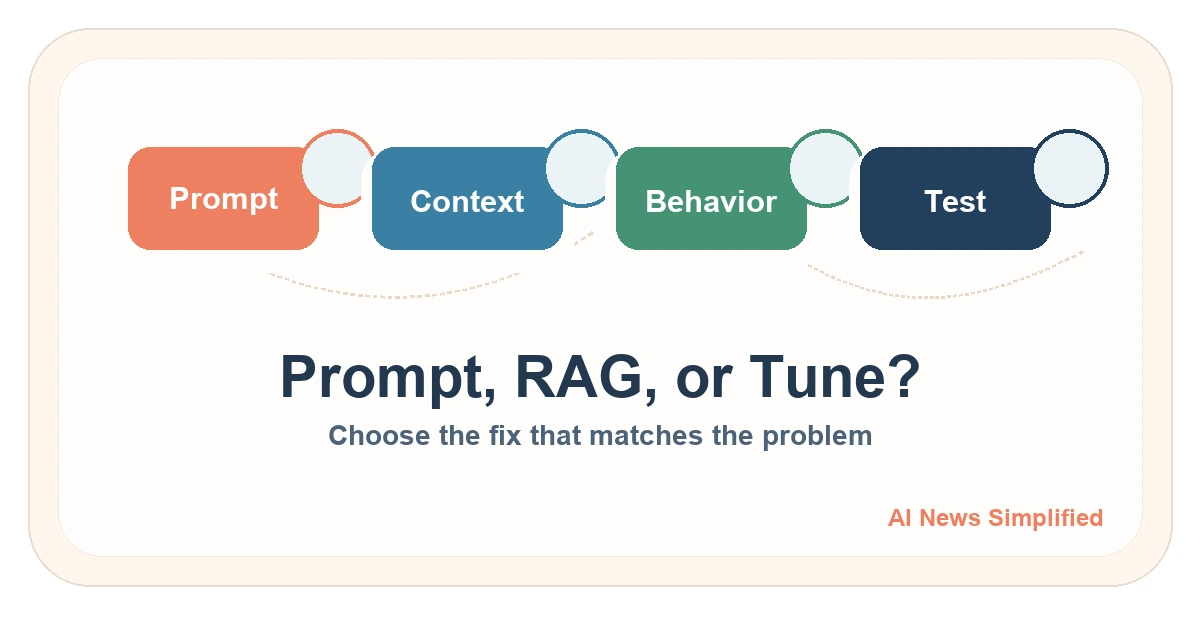
Prompting vs RAG vs Fine-Tuning: How to Choose
Diagnose the failure first: unclear instructions, missing knowledge, or inconsistent repeated behavior. Then test the least complex suitable fix.
-
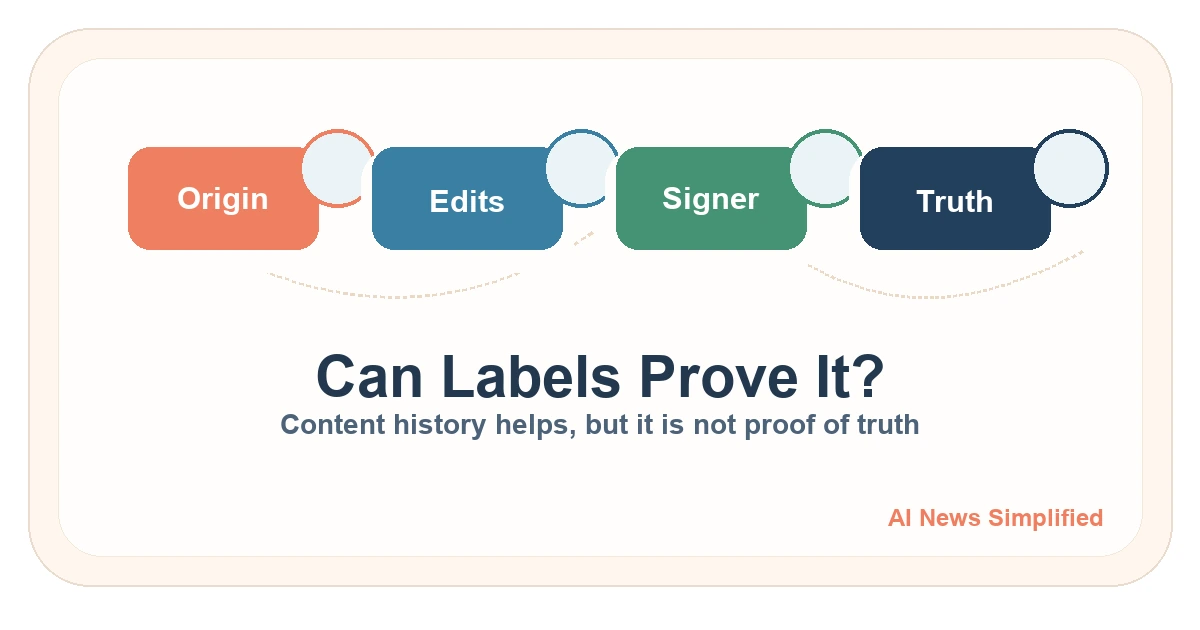
Can Content Credentials Prove an Image Is Real?
Content Credentials provide signed, tamper-evident provenance. They can reveal history and edits, but they do not prove truth, ownership, or identity.
-
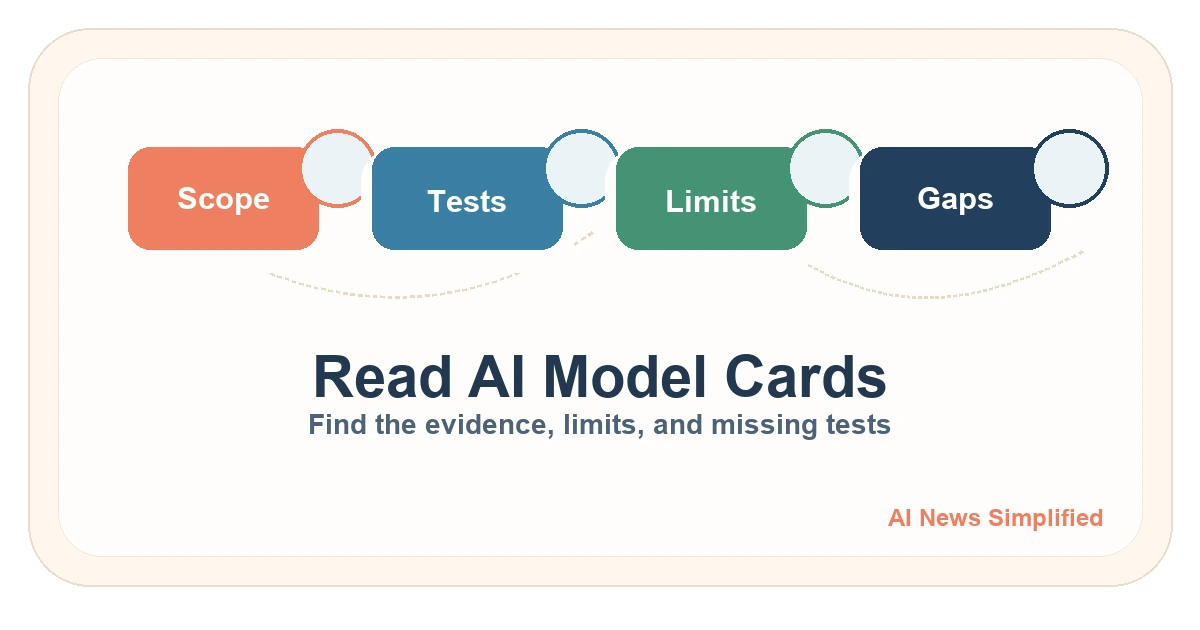
How to Read AI Model Cards and System Cards
Check the exact system, intended use, evaluation setup, limitations, mitigations, update history, and what was not disclosed or tested.
-
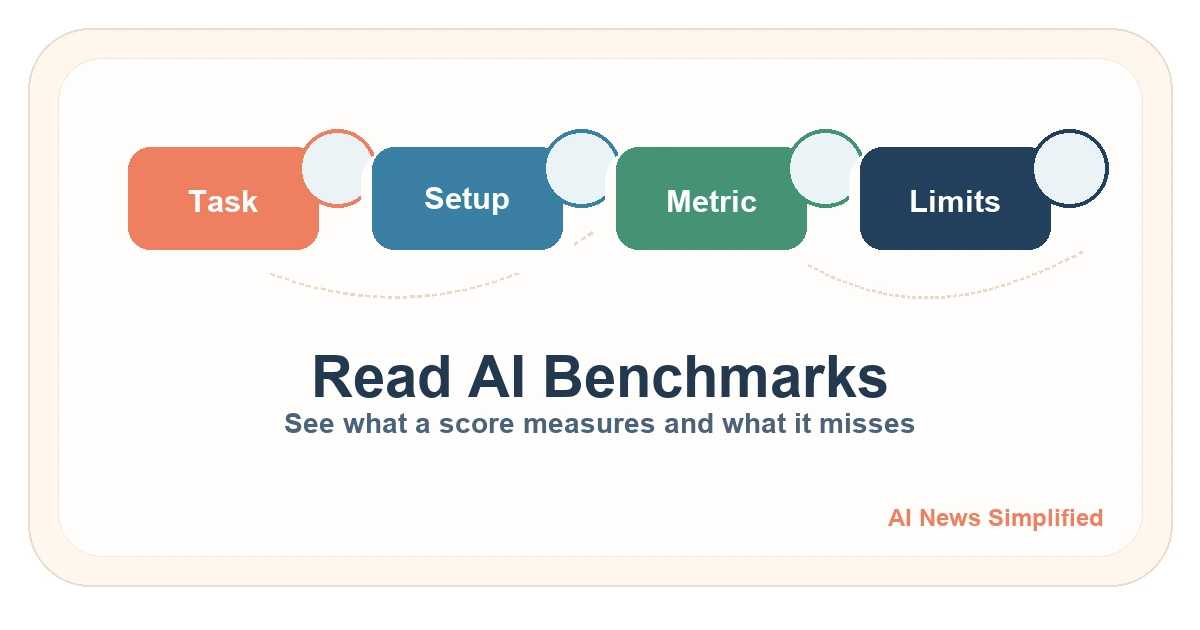
How to Read AI Benchmarks and Leaderboards
An AI score describes one evaluation. Check the task, data, setup, metric, uncertainty, contamination risk, and connection to your real work.
-
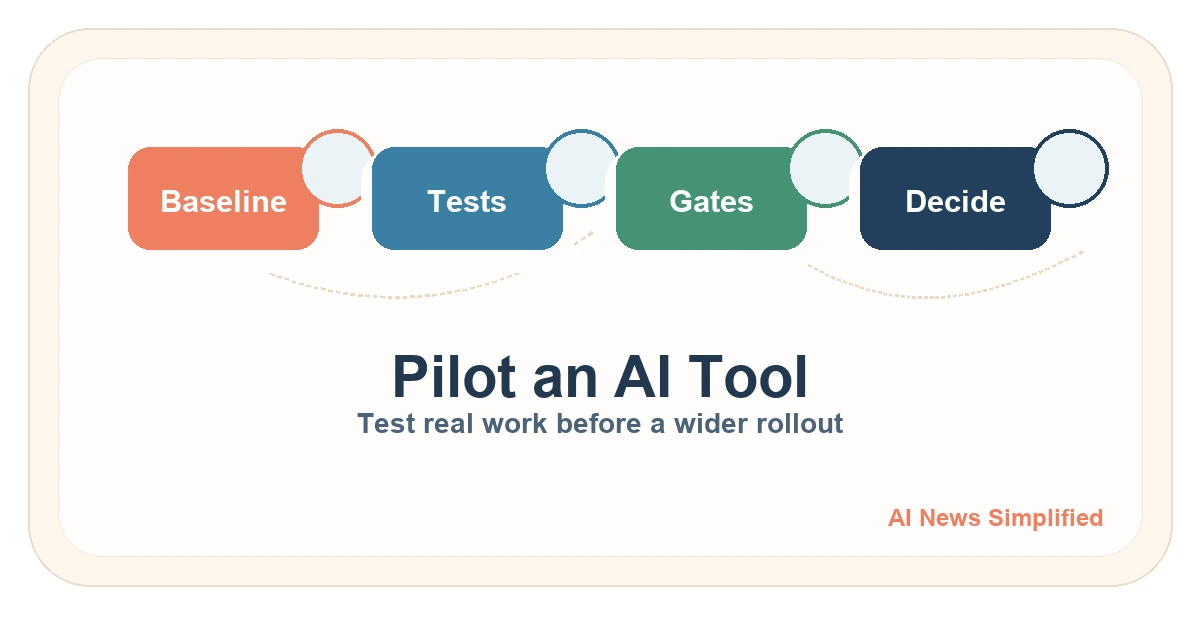
How to Run an AI Pilot: A Scorecard for Small Teams
A useful AI pilot compares real work with a baseline, tests normal and edge cases, logs failures, and sets go, hold, or stop rules…
-
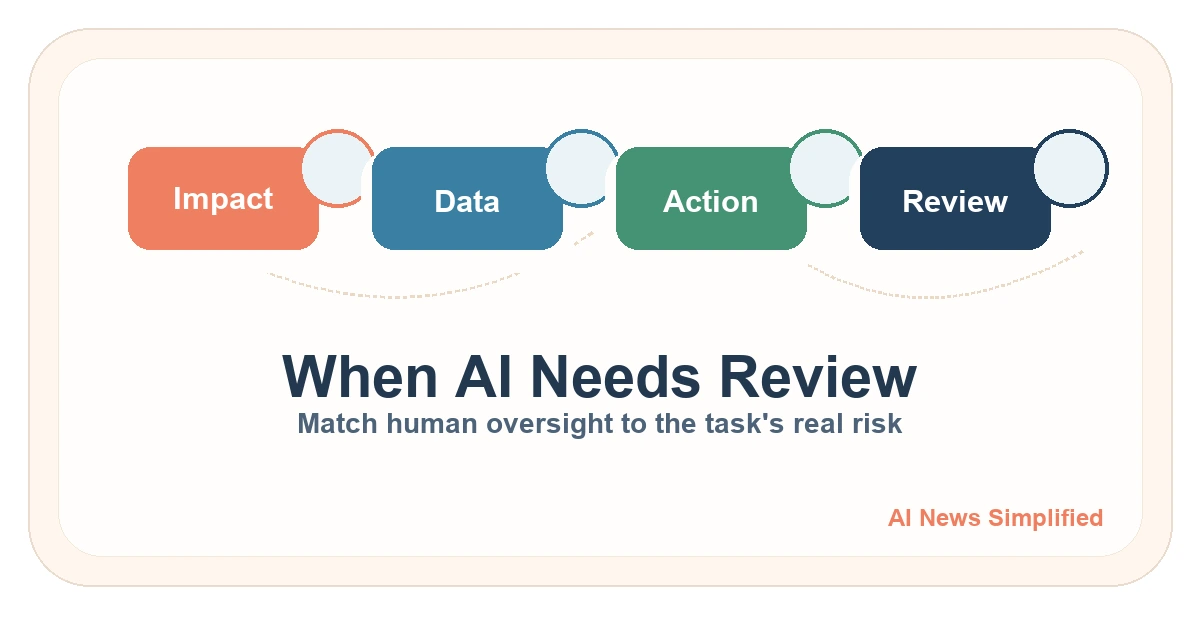
When AI Needs a Human: A Simple Approval Matrix
Match human oversight to impact, reversibility, audience, data, and autonomy instead of adding a vague human-in-the-loop label.
Relevant recent news
For current developments, use Browse the Weekly Brief. For practical business use, use AI for Small Business.
Explore deeper
Choose the next guide that matches the decision or concept you are working through.
New practical AI guides
New model and media literacy guides
Side-by-side comparison
Training Vs Inference
Training is how a model learns patterns. Inference is when it uses those patterns to answer a new prompt.
Comparison explaining that training learns patterns before use while inference uses learned patterns when a user asks something.
| Question | Training | Inference |
|---|---|---|
| Basic idea | Training: model learns patterns from data. | Inference: model uses learned patterns to answer a new prompt. |
| When it happens | Training is usually expensive and done before use. | Inference happens when the user asks something. |
| Practical caveat | Fine-tuning can update a model for a narrower task. | The answer still needs checking when accuracy matters. |