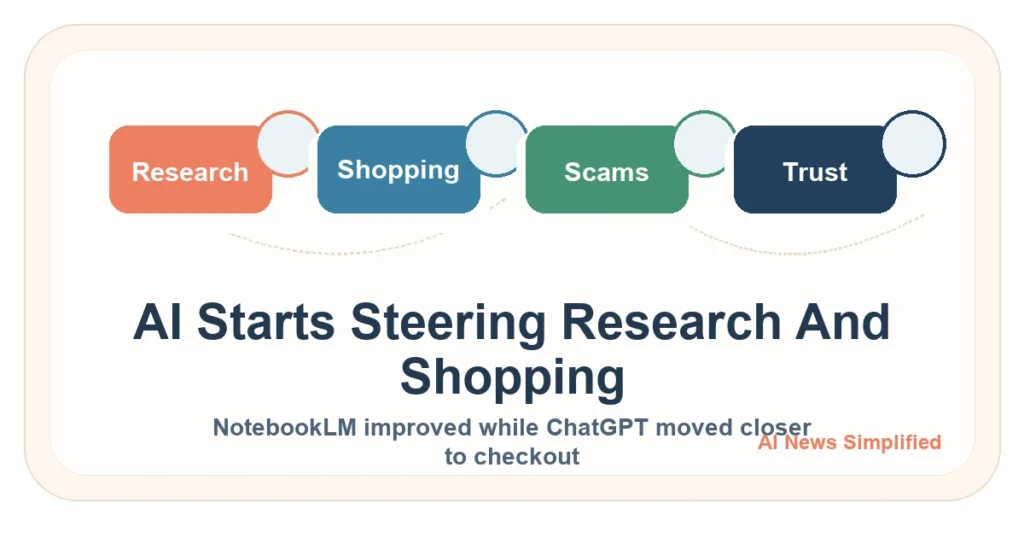
June 8 was about AI getting closer to ordinary decisions. The strongest stories covered research help, online scams, and shopping, which means AI is now shaping how people learn, what they trust, and what they buy.
What happened
-
Google said NotebookLM can help people do better research. Google published new guidance and updates around using NotebookLM for stronger research work. That matters because many people do not need a genius chatbot. They need a patient helper that can organize sources and keep facts in view.
-
Google issued a new scams and fraud advisory. Google released its June 2026 frauds and scams advisory tied to AI-era threats. This matters because AI can make fake voices, fake urgency, and fake messages cheaper to produce, which raises the pressure on ordinary users to slow down and check.
-
OpenAI pushed shopping further into ChatGPT. OpenAI published new work around shopping and buying inside ChatGPT. That matters because when AI starts helping people shop, it moves from answering questions to steering spending, which is a much bigger trust test.
What this means for me?
- If you research for work or school, notebook-style AI may be more useful than general chat for keeping evidence organized.
- If you shop through AI, ask how recommendations are ranked and whether the system is nudging you toward a sale.
- If scam attempts feel more believable lately, that is not your imagination.
Related reading: Latest AI News and AI Tools.
Bottom line: June 8 showed AI getting more helpful and more influential at the same time. That makes judgment, trust, and safety more important, not less.