AI news moved fast on Tuesday, June 24, 2026. The big theme was simple: AI companies are not just making chatbots anymore. They are building the chips, tools, and work helpers that could slip into everyday jobs and services. You can find more plain-English coverage on our Latest AI News page.
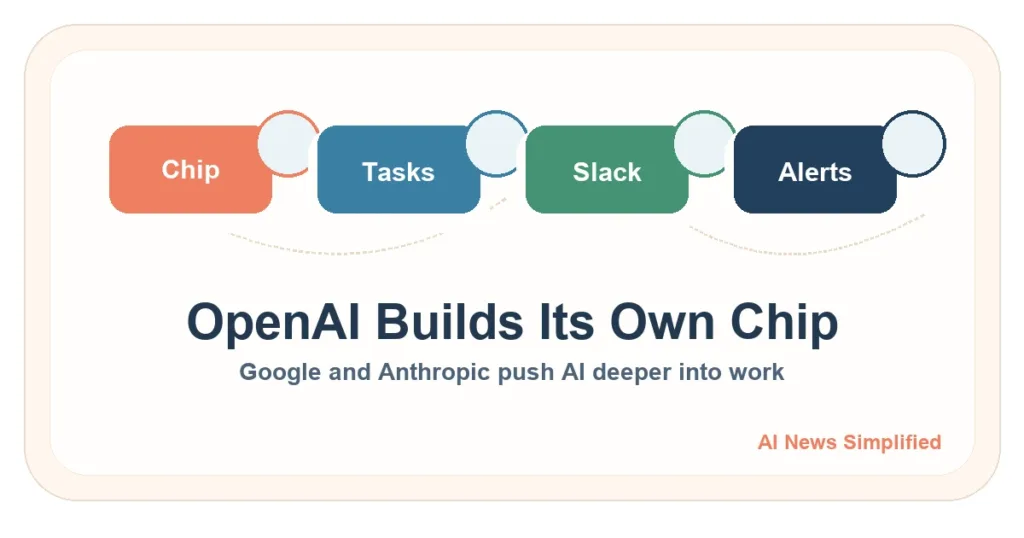
- OpenAI built its first custom AI chip with Broadcom. OpenAI said its new chip, called Jalapeno, is made for AI inference, which means the part where a model answers your question after training is done. The company says early tests show better performance for each watt of electricity, which matters because power and chip costs are a big reason AI is expensive. If this works at scale, it could help make tools like ChatGPT faster and cheaper over time.
- Google put computer use inside Gemini 3.5 Flash. Google says the model can now see what is on a screen and take actions across browser, mobile, and desktop apps. In plain English, this means developers can build AI agents, which are tools that do multi-step tasks for you instead of only chatting back. Google also added safety checks, including optional approval for sensitive actions, which matters because nobody wants a helpful robot that also clicks the wrong button.
- Anthropic turned Claude into a Slack teammate. Its new Claude Tag feature lets teams call in Claude with an @ mention, give it access to chosen tools, and let it work in the background. Anthropic says the system can remember channel context and even follow up later, though admins can set limits on what it can see and do. That matters because office AI is shifting from a private side window to a shared team helper.
- Google said its AI weather and flood tools are reaching more people. The company said Flood Hub now covers 2 billion people in more than 150 countries, with river flood forecasts up to seven days ahead and urban flash flood warnings up to 24 hours ahead. This is a different kind of AI story: less about flashy demos, more about getting people warning time before a bad day gets worse. For regular readers, that may be the most useful kind of smart software there is.
Bottom line: Today’s AI news was really about control. OpenAI wants more control over the hardware, Google wants AI to do more actions safely, and Anthropic wants AI to work with whole teams. The closer these tools get to real work and public safety, the more the boring details like cost, permissions, and reliability start to matter.
Sources:
OpenAI and Broadcom unveil LLM-optimized inference chip
Google: Introducing computer use in Gemini 3.5 Flash
Anthropic: Introducing Claude Tag
Google: Towards a world where no one is surprised by a natural disaster