June 4 was a strong day for practical AI. The stories were not about giant promises. They were about creators, office work, and the nuts and bolts of making AI agents safe enough to use.
What happened
-
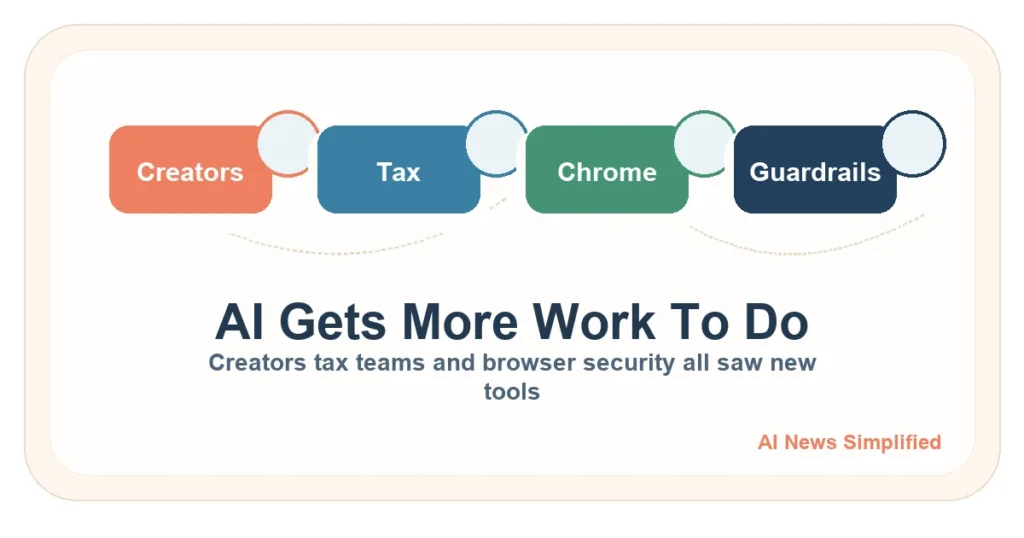
Meta launched Creator Assistant and more AI translation support. Meta introduced Creator Assistant and added more languages for AI translations on Facebook. That matters because creators and small businesses need help reaching people in more than one language, and AI can lower that cost fast.
-
OpenAI showed how Codex can help build tax agents. OpenAI published a case study on building self-improving tax agents with Codex. This matters because tax work is detail heavy, rule bound, and expensive when done poorly, which makes it a serious test for AI that claims to be useful at real jobs.
-
Google explained the security design behind Chrome’s agentic features. Google published a deeper look at how it is architecting security for agentic capabilities in Chrome. That matters because agents sound magical until they get broad access to your browser, and then the real question becomes how they are contained.
What this means for me?
- If you create content or sell online, language support is one of the easiest ways AI can widen your reach.
- If AI can handle tax-style work, that says more about usefulness than a dozen cute demos do.
- If browser agents become normal, security design will matter as much as convenience.
Related reading: Latest AI News and AI Tools And Work.
Bottom line: June 4 was about useful AI with strings attached. The value is becoming clearer, and so is the need for real guardrails.