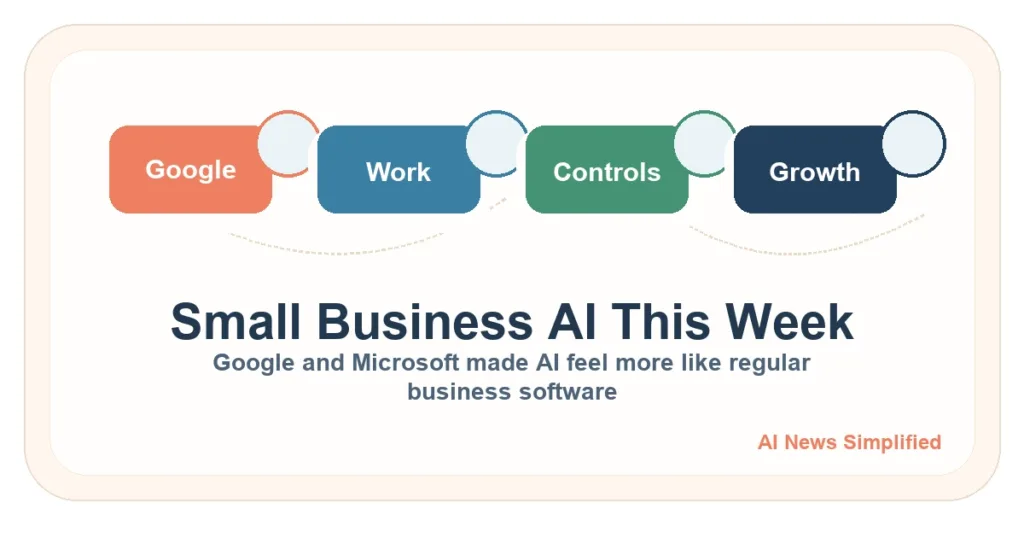
This week’s small business AI news was about useful, ordinary work. The biggest changes were not robot drama. They were practical updates around small-business marketing, workplace controls, and office software that is getting harder to ignore.
What changed
Google highlighted how its AI tools can help small businesses grow, Microsoft started packaging more controls for AI agents inside enterprise work, and OpenAI kept pushing ChatGPT-style tools deeper into everyday office use. The common thread was simple: AI is moving out of experiments and into routine business tasks.
What this means for small businesses now
- Small businesses should pay more attention to built-in AI features inside tools they already use before paying for separate AI products.
- Companies using AI helpers at work need better approval controls, especially if the tools can act inside files, browsers, or internal systems.
- Owners and teams should focus on one measurable use case first, like customer replies, marketing drafts, or meeting notes.
What it could mean later
The longer trend is that AI will probably arrive through regular business software long before most small companies build anything custom. That means competition may shift from who has AI to who uses it well and safely.
How a small business could use this
- Test AI inside tools you already pay for before adding a new subscription.
- Create simple rules for what AI can draft, what it can send, and what always needs human review.
- Measure time saved each week so you can tell the difference between a helpful tool and a shiny distraction.
What to watch before spending money
Do not treat AI like free labor with no supervision. Cheap automation can become expensive confusion if the tool sends wrong information, uses a bad tone, or touches data it should not touch.
Related reading: AI For Small Business and Latest AI News.