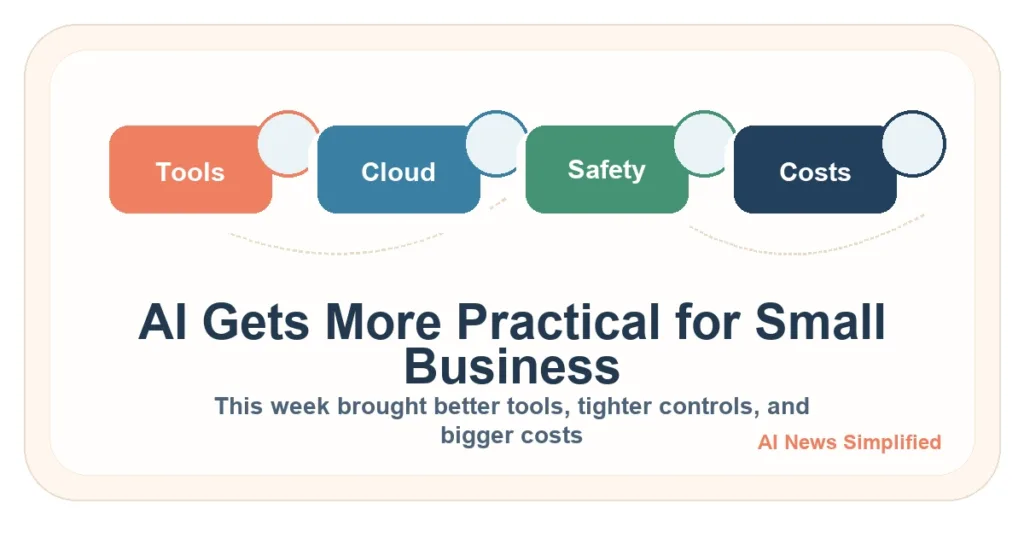
This week made one thing clear: AI is becoming easier for small businesses to try, but harder to ignore. The tools got better, the big cloud platforms made them easier to buy, and the security and control features got more serious too. That is good news if you want help with writing, customer service, research, or coding, but it also means it is time to think more carefully about cost, privacy, and where these tools actually fit.
What changed
OpenAI released GPT-5.5 and pushed it toward real office work. OpenAI says GPT-5.5 is built for tasks like research, spreadsheets, documents, and software work. For a small business, that means the newest AI tools are being shaped less like toys and more like digital helpers.
OpenAI also brought its models, Codex, and managed agents to AWS. AWS is Amazon Web Services, a major cloud platform. This matters because small companies already using AWS may get a simpler path to test OpenAI tools inside the systems, permissions, and billing setup they already know.
Microsoft kept showing that companies are paying for AI, not just talking about it. Microsoft said its AI business is now running above $37 billion a year, and Agent 365 became generally available on May 1. Agent 365 is Microsoft’s control center for AI agents, which are software helpers that can take actions across tasks and tools.
Security got more serious. OpenAI rolled out Advanced Account Security for personal ChatGPT accounts, with stronger sign-in methods like passkeys and security keys. If your business uses ChatGPT for notes, drafts, or private ideas, safer account protection matters just as much as smarter answers.
The cost race is still growing. OpenAI said its Stargate build has already passed the 10 gigawatt U.S. target it first set for 2029, while Google, Amazon, and Meta all pointed to continued heavy AI spending. In plain English, the biggest companies still believe better AI needs much more computer power, and they are spending like they mean it.
What this means for small businesses now
The biggest change right now is choice. A small business can test stronger AI tools through ChatGPT, Microsoft, or AWS without building a whole tech lab. That can help with writing marketing copy, summarizing meetings, answering common customer questions, and speeding up basic research.
But this week also showed that AI is growing up fast. The more useful these tools become, the more they need rules around who can use them, what data goes into them, and how results get checked before they reach a customer.
What it could mean later
Over time, this week’s news could make AI cheaper and more normal in everyday business software. If OpenAI keeps expanding through AWS and if Microsoft keeps baking agents into work tools, small businesses may get more plug-and-play options instead of custom projects.
The other long-term effect is pressure. As bigger companies adopt AI faster, smaller firms may feel pushed to move too. That does not mean every shop needs an AI plan today, but it does mean waiting too long could leave some teams slower than competitors on basic office tasks.
How a small business could use this
Start with one narrow job, not ten. Good examples are turning rough notes into a first draft, making FAQ answers for support, or helping one employee summarize vendor calls. If you already use AI tools at work, this is a good week to review whether a stronger model or a cloud-based setup would actually save time.
If you are newer to this, keep it simple. Read our AI for small business guide, then compare one tool against one real task. The goal is not to buy the fanciest system. The goal is to save time without creating new messes.
What to watch before spending money
Watch for four things: price creep, staff training time, data privacy, and over-promises from vendors. A tool that looks cheap each month can become expensive once you add extra seats, API usage, setup help, and human review time.
Also remember that stronger AI still makes mistakes. Use it like a quick junior helper, not like a final decision-maker. For more updates like this, keep an eye on our latest AI news page.
Sources
- OpenAI: Introducing GPT-5.5
- OpenAI: OpenAI models, Codex, and Managed Agents come to AWS
- Microsoft: Cloud and AI strength fuels third quarter results
- Microsoft: Introducing the Frontier Suite
- OpenAI: ChatGPT release notes
- Google: Gemini is coming to cars with Google built-in
- OpenAI: Building the compute infrastructure for the intelligence age