When state governments begin enacting policies to manage artificial intelligence, it signals a major shift from early tech adoption to official public regulation. This week, California took a major step that could eventually reshape how small businesses hire workers and use AI in their daily operations. For owners tracking latest AI news, understanding these regulatory moves is essential to staying ahead of compliance requirements when adopting AI for small business workflows.
What changed
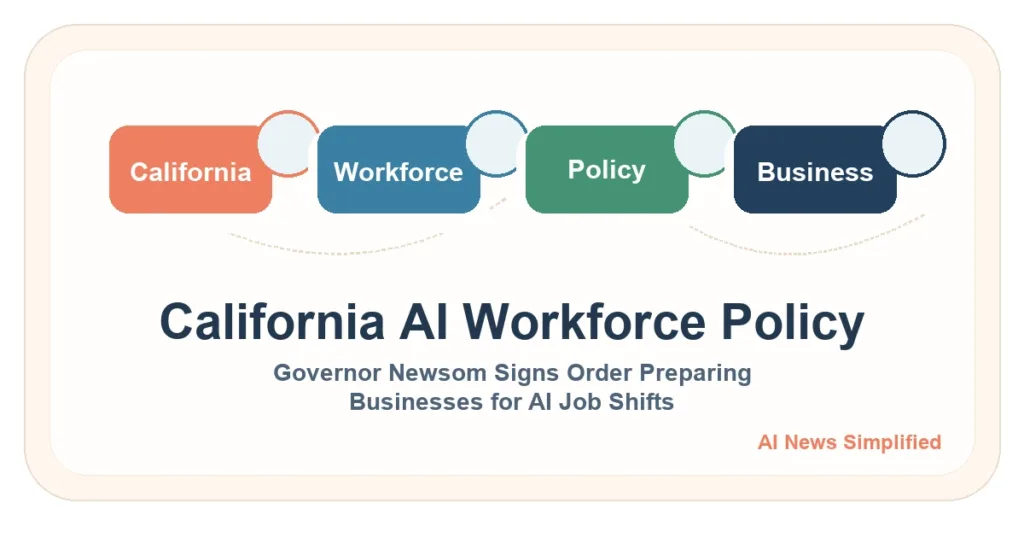
California Governor Gavin Newsom has signed a new executive order directing state agencies to prepare for potential job market disruptions and economic shifts caused by artificial intelligence. The order mandates that the state’s Labor and Workforce Development Agency and the Department of Finance produce a detailed report within 90 days. This report will study skills gaps, hiring changes, and potential layoffs driven by AI. Within 180 days, agencies must recommend new policies, which may include updating the state’s WARN Act (which requires employers to give advance notice of major layoffs) to include AI-related job cuts. The state will also launch a new dashboard to track AI-related layoffs and monitor how companies use AI tools to make employment decisions.
What this means for small businesses now
Right now, there are no new laws, fines, or compliance paperwork for small business owners to worry about. The executive order is a directive for state agencies to research the market, not a set of immediate mandates for private employers. However, if your business is based in California, or if you employ remote workers in the state, this order serves as an early signal. It tells us that state officials are actively watching how companies use AI algorithms to screen job applicants, manage employees, and decide on layoffs.
What it could mean later
In the long run, this executive order is highly likely to lead to new employment regulations in California. We could see strict guidelines on using AI tools to screen resumes, evaluate worker performance, or conduct interviews, to prevent bias or unfair practices. Businesses might also be required to formally report if they replace any roles with AI automation. On a more positive note, the state plans to develop public retraining programs. This means small businesses could soon gain access to state-funded training grants, allowing them to upgrade their current workers’ skills on how to use modern AI tools at work without paying out-of-pocket for expensive courses.
How a small business could use this
To prepare for these future changes and take advantage of new opportunities, small business owners should consider these steps:
- Prepare for training grants: Once the state releases its workforce policies in six months, check for state-funded training programs. These resources can help you retrain your existing team to use AI efficiently, helping you keep your workforce competitive.
- Audit hiring and HR tools: If you use third-party hiring platforms that use AI to rank resumes or score job candidates, ask the software vendors for compliance documentation. Ensuring these tools are transparent and free of bias now will prevent legal headaches later as state tracking begins.
- Document your AI usage: Begin keeping a simple internal log of which AI systems your business uses, who has access, and how they assist in daily operations. Having a clear record will make future reporting or compliance audits much easier to manage.
What to watch before spending money
Do not rush out to buy expensive “AI compliance” software or hire legal consultants to rewrite your company policies today. The state is still in the research phase, and no official laws have been passed. Spending money now on compliance tools is premature, as the final regulations may look very different from what is being studied today. Instead, focus on using affordable, standard tools to improve your efficiency, and simply follow the state’s official announcements as the 90-day and 180-day deadlines approach.
Sources
- California Governor Gavin Newsom signs AI executive order: California Governor’s Office
- California state agencies tasked with AI workforce reporting: The Sacramento Bee / StateScoop